
Guide to Traditional Balinese Spa Rituals
Learn the steps, techniques, and traditional ingredients of a Balinese spa ritual. Compare Balinese massage to Javanese and Thai styles.
Relevant Wellness Placement
Slot ID: article-top-banner • Format: horizontal
Understanding Balinese Spa Rituals: Techniques and Ingredients
If you are planning a spa visit in Bali or comparing Southeast Asian massage styles, it helps to know what a Balinese spa ritual involves. This guide explains what happens during a session, the traditional ingredients used, and how it compares to other regional styles.
What Happens During the Session?
A typical Balinese spa treatment follows a specific order:
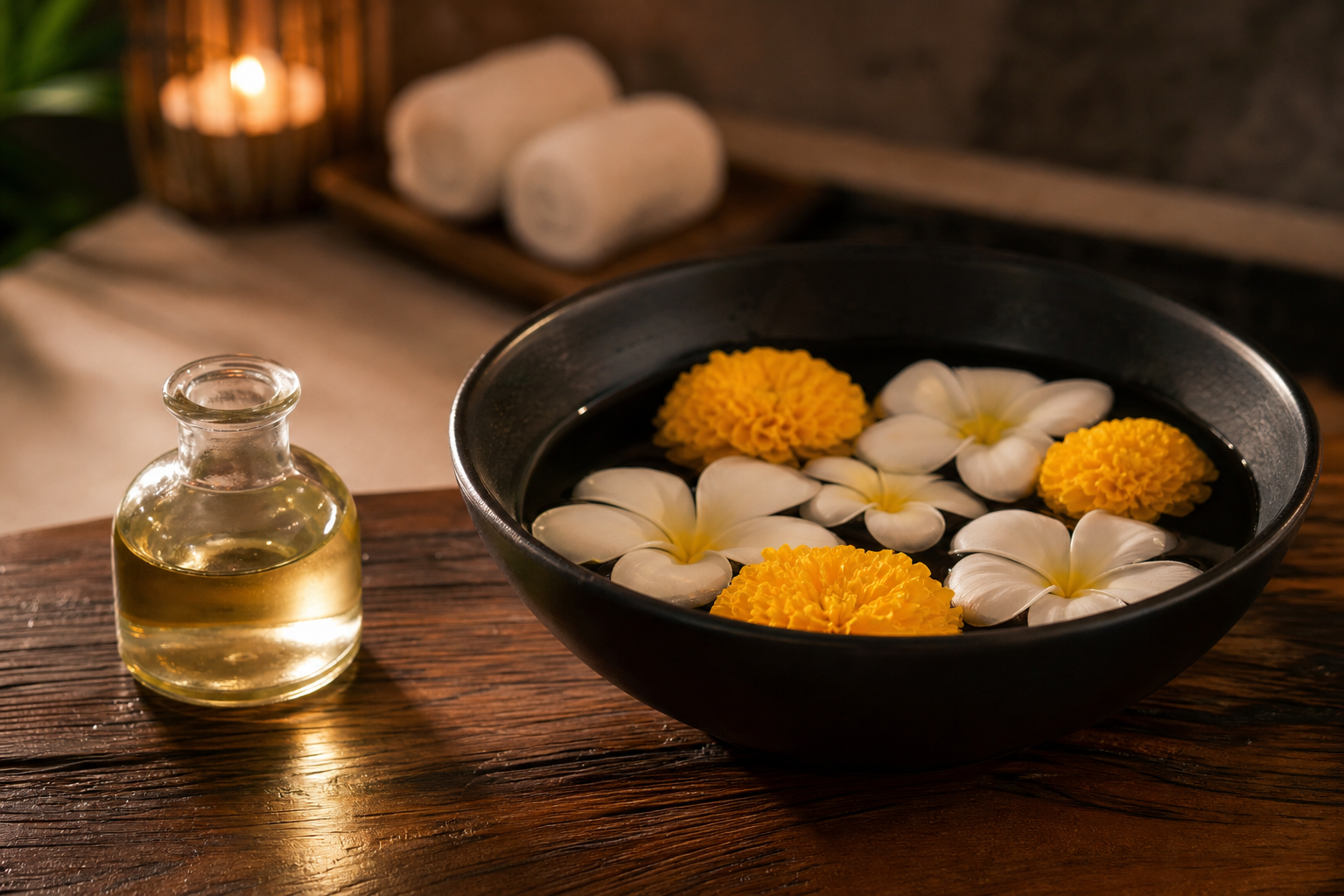
- Foot Bath: You start by sitting on a chair. The therapist washes your feet in a bowl of warm water mixed with sea salt and fresh flower petals.
- Body Massage: You lie down on a massage table. The therapist will cover your body with clean sheets or a traditional sarong, uncovering only the area they are working on (a practice called proper draping) to keep you warm and comfortable.
- Oil Massage: The therapist performs a full-body massage using oil. They combine long strokes, skin rolling, kneading, and gentle pressure on specific points. They may also include light stretching to release muscle tension.
Note: These treatments are for relaxation. They are separate from Usada Bali, which is the sacred temple healing of Balinese Hindu tradition. If you have an injury or are pregnant, tell your therapist before the session begins.
Traditional Ingredients: Lulur and Boreh
Balinese spas use natural, local ingredients for body scrubs and wraps. The two most common are Lulur and Boreh.
Lulur Body Scrub
Lulur is a fine body scrub made from ground rice, turmeric, and sandalwood. The therapist applies the paste to your skin, lets it dry, and then scrubs it off to exfoliate and smooth your skin. While Lulur is popular in Bali today, it originally comes from the royal courts of Java. You can read more about these ingredients in our guide to natural spa scrubs.
Boreh Warming Paste
Boreh is a warm paste made from spices like ginger, cloves, and nutmeg. It is applied to help heat up muscles and ease body aches. Because Boreh contains warm spices, it can irritate sensitive skin. You should ask for a small skin test patch first if you are prone to irritation.
Spas usually use coconut oil scented with local flowers like frangipani. These natural ingredients help soothe skin and muscles, but they do not cure diseases or detoxify the body.
Balinese Massage vs. Other Southeast Asian Styles
Here is how Balinese massage compares to other popular styles in the region:
- Balinese Massage vs. Thai Massage: Thai massage uses no oil. You wear loose clothes while the therapist uses dry pressure and active stretching. Balinese massage uses oil and features continuous, flowing strokes.
- Balinese Massage vs. Javanese Massage: Javanese massage uses deep, firm thumb pressure. It is generally stronger and more intense than Balinese massage.
- The Balinese Technique: Balinese massage sits in the middle. It balances oil-based strokes, skin rolling, and gentle stretching.
To learn more about regional styles, read our guide to traditional massage types in ASEAN.
Relevant Wellness Placement
Slot ID: article-bottom-banner • Format: horizontal